OCPP at Enua
Enua Charge speaks the Open Charge Point Protocol (OCPP), so you can connect Enua chargers to your own Charging Station Management System (CSMS). Enua Charge supports both OCPP 2.0.1 and OCPP 1.6, letting you integrate using whichever version your system targets.
Note
New to OCPP? See About OCPP below for a general introduction to the protocol.
How these docs are organized
The pages follow the functional structure of the OCPP standard, from getting connected through to each group of operations. Where Enua behaves differently from the standard, the difference is called out inline and summarised on the Deviations from the Standard page.
Getting started
- Architecture & Topology — the OCPP model, how an Enua charger maps to it, and how the two OCPP versions are negotiated.
- Connecting as a CPO — register as a Charge Point Operator and connect chargers to your CSMS.
Operations (mirroring the OCPP functional blocks)
- Provisioning — boot, heartbeat, status, and reset.
- Authorization & Identity — how users and transactions are authorized.
- Transactions — the charging-session lifecycle and meter values.
- Remote Control — start/stop, unlock, availability, and trigger messages.
- Configuration — reading and changing configuration.
- Smart Charging — charging profiles and schedules.
Reference
- Custom Extensions — Enua-specific features: Free Charging, AutoCharge, and Permalock.
- Supported Configuration Keys — the configuration keys available for OCPP 2.0.1 and 1.6.
- Deviations from the Standard — a consolidated list of where Enua differs from OCPP.
About OCPP
The Open Charge Point Protocol (OCPP), developed by the Open Charge Alliance, is an application protocol that standardizes communication between Electric Vehicle (EV) Charging Stations and Charging Station Management Systems (CSMS). Its purpose is to ensure compatibility and flexibility as the world transitions to a more EV-centric future, creating a way for any Charging Station to connect with any management system. This is why OCPP has become the standard across the globe.
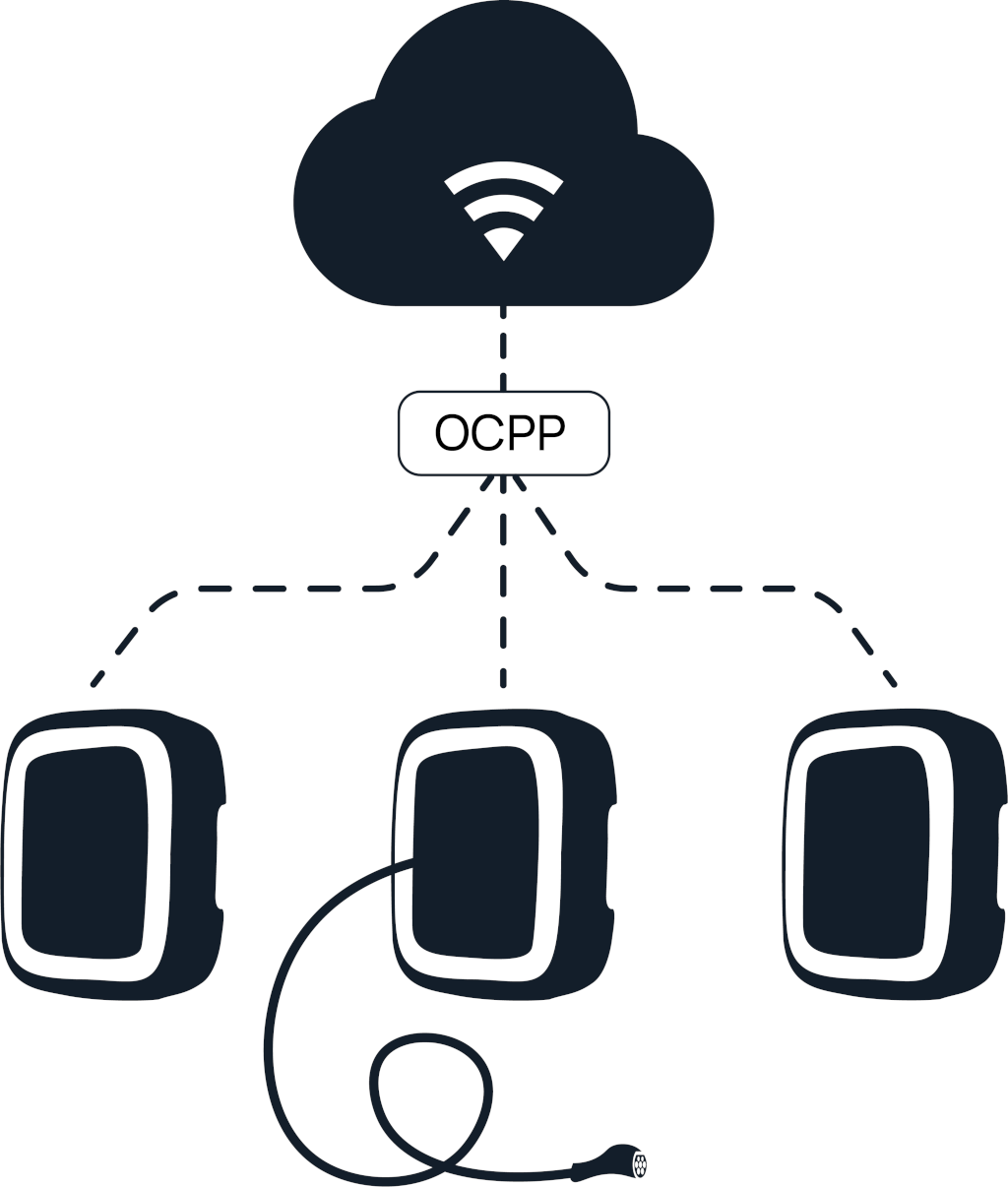
Advantages of adopting OCPP
Through OCPP there is now a standardized way to communicate a number of key functions, including start and stop, status messages, availability, authorization, transaction handling, and more.
Previously, many EV Charging Station manufacturers used custom systems and software to implement these features. With OCPP as an industry standard, third-party management systems can easily adapt, upgrade, or mix their Charging Stations without the need to revise their own systems. This flexibility also allows EV Charging Station owners to select a management system that best suits their needs.
In summary, OCPP promotes innovation, flexibility, security, and interoperability for the Electric Vehicle community through a free-to-use, open-source standard.
OCPP versions
There are multiple versions of OCPP currently in use, with OCPP 2.0.1 being the most recent to fully launch at the time of writing. Version 2.0.1 was released in 2020, adding features and functions requested by the community like improved Device Management, improved transaction handling, and more.
OCPP 1.6 was released in 2015 and made a big impact around the world. It is still in wide use today despite the newer versions being published.
For more information regarding OCPP and its versions, visit the Open Charge Alliance website.